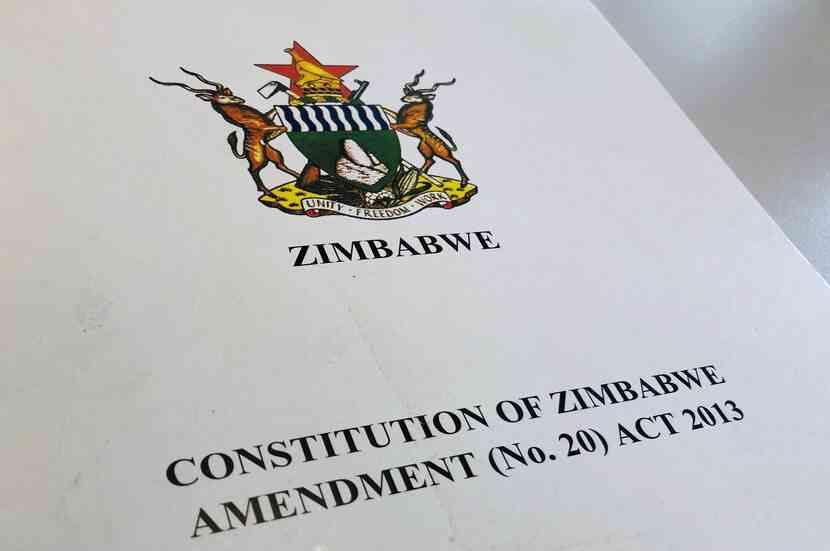
Zimbabwe to amend its Constitution - Simplified Version
On Monday the 16th of February the Government of Zimbabwe gazetted the Constitution Amendment Bill (No. 3) Here’s a simplified version of the changes 1) Voters’ registration and voters’ roll • Voter registration and the voters’ roll will be handled by the Registrar-General, not the Zimbabwe Electoral Commission (ZEC). • This means the office that keeps people’s records will also keep the voters’ list. 2) How the President is chosen • You will no longer vote directly for the President. • Members of Parliament (MPs and Senators) will choose the President in a joint meeting. • To win, a candidate must get more than half the votes. • If no one gets more than half, the top two go to a second vote (run-off). • If the President’s seat becomes empty (death/resignation/removal), Parliament must choose a new one within 30 days. 3) Longer terms in office • The Bill changes the term from 5 years to 7 years for: o The President o Parliament o Local Government • Elections will also be adjusted to match the 7-year term. 4) Senate numbers increase • The Senate will increase from 80 to 90 senators. • The President will appoint 10 extra senators (chosen for skills/experience). 5) New body for drawing voting boundaries • A new commission will be created called the Zimbabwe Electoral Delimitation Commission. • It will be responsible for drawing electoral boundaries (wards/constituencies). • Time for boundary work changes from 6 months to 18 months. 6) Constitutional Court powers expand • The Constitutional Court can also hear other important legal matters, not only strictly constitutional cases. 7) Appointment of judges’ changes • Some rules are removed so that judges are appointed after consulting the Judicial Service Commission. • No public interviews will be conducted. 8) Gender Commission removed • The Zimbabwe Gender Commission will be removed. • Its work will move to the Zimbabwe Human Rights Commission, including gender equality issues. 9) Prosecutor-General appointment • The President will appoint the Prosecutor-General without needing advice from the Judicial Service Commission. 10) Traditional leaders • A constitutional rule limiting traditional leaders’ political rights is removed. • Their conduct rules will be put in an Act of Parliament instead. 11) Peace and Reconciliation Commission removed • The National Peace and Reconciliation Commission will be removed from the Constitution. 12) Functions of the Defence Forces • This change is about what the Defence Forces (army) are expected to do. • The Constitution currently says the Defence Forces must “uphold (protect) the Constitution.” • The Bill wants to change that wording to say the Defence Forces must act “in accordance with (follow) the Constitution.”
0 Comments